The morphosyntax of who knows what and how in interaction
Workshop at the 59th Annual Meeting of the Societas Linguistica Europaea (SLE 2026), Osnabrück, 26-29 August 2026.
Organisers
Jenneke van der Wal (Leiden University)
Karolina Grzech (UPF Barcelona)
Martina Wiltschko (ICREA/UPF Barcelona)
Call for papers: see below – 500 words by 15 January 2026. Note that you have to be a member of SLE in order to submit an abstract.
Summary
The speaker’s and addressee’s knowledge can be(come) an essential aspect of a language’s grammar and languages differ in how it is realized. Some languages encode the source of the knowledge (evidentiality), other languages may indicate the speaker’s certainty (epistemic modality), or the relative newness of the information (information structure, mirativity); additionally languages may show how the knowledge is distributed across the interlocutors (engagement and egophoricity). While descriptive and typological research is making progress in acknowledging the grammar of interactionality and its variation, formal linguistic models are yet to catch up. This workshop aims at bringing together descriptivists, typologists and formalists to explore how epistemicity can be formally modelled.
Keywords: epistemicity, formal morphosyntax, typology, evidentiality, information structure, egophoricity, engagement, epistemic modality, mirativity
The debates about categories
While the linguistic category of epistemic modality has long been studied in the European linguistic tradition, the description of similar systems in languages beyond Europe caused debate about the boundaries of this category. For example, should “source of knowledge” (i.e., evidentiality) be subsumed under the category of (epistemic) modality? This eventually lead to the recognition of a separate category of evidentiality in the typological and functional literature (Willett 1988, Chafe & Nichols 1986; see overviews in Aikhenvald 2004, 2018). The conceptual area of the speaker’s knowledge was thus extended beyond (un)certainty. But crosslinguistic variation shows even further possibilities, all under the broad term of epistemicity (see figure and Grzech & Bergqvist in press): the notions of egophoricity (Tournadre 1992, 1994; see San Roque et al. 2018 for an overview) and that of mirativity (DeLancey 1997, 2012; Aikhenvald 2012, a.o.) are also proposed to be part of it, as was the category of engagement (Evans et al. 2018ab, Bergqvist & Kittilä 2020). To this, we may also add information structure, as this too concerns how the knowledge states of speaker and addressee affects grammar (see Ozerov 2018 and the MapLE project). Epistemicity thus relates to six proposed categories and fields, as shown in Figure 1:
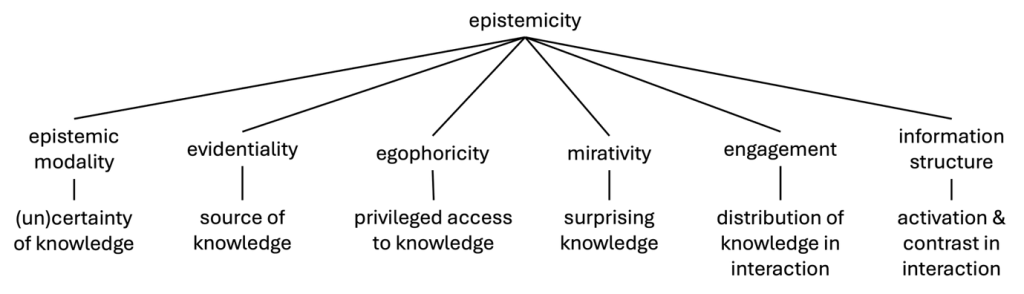
Figure 1: Sub-fields of epistemicity postulated to date
For all the proposed ‘categories’ within epistemicity, we have seen the same three debates: Are these independent categories? What are the boundaries of the category? Is the category universal? These questions are still hotly debated in descriptive and typological studies, but also challenge formal linguists: How can we model both the universal and the language-specific properties in epistemicity? The crosslinguistic variation in the expression of all the aspects of epistemicity shows that different languages can grammaticalise different aspects of epistemicity. This in turn has consequences for a hypothesised inventory of relevant features, as well as for a hypothesised universal base.
Morphosyntactic theory
The grammaticalisation of the (relative) knowledge of the speaker and addressee means that interactionality must play a bigger role in the formal modelling of morphosyntax (Dingemanse et al. 2023, a.o.). Going beyond cartographic proposals (Cinque 1999, Speas & Tenny 2003, Speas 2004), the recently revived debate about the ‘syntactisation’ of interactionality (Wiltschko 2021, Miyagawa 2022, a.o.) postulates an interactional layer in the left periphery of the sentence. Here, the proposition is grounded with the speaker or addressee (as in Figure 2), which is shown to work well for peripheral interactives such as ‘eh?’ or ‘well’.
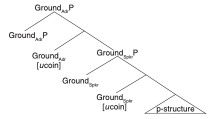
Figure 2 – The interactional spine linking the Addressee’s and Speaker’s ground to the propositional structure (Wiltschko 2021: 82)
The grammatical(ised) expression of epistemicity brings the next challenge for such a framework: there is an undeniable interactional aspect to such epistemic expressions, yet they are often not expressed in the left periphery but intimately interwoven with verbal morphology. How can we account for this interaction between higher and lower parts of the spine? What is universal and which features are parameterised? What can the co-expression of different aspects of epistemicity tell us about the underspecification or multifunctionality of constructions and formal features? Or should we be looking for completely different models?
Typology
In order to know which aspects to account for, typological work is essential, specifically studies that are interested in and based on interactional data. It is increasingly clear that a full appreciation of the semantic-pragmatic functions of epistemic expressions requires contextualised natural dialogic data (Bergqvist & Grzech 2023, a.o.). Speakers will naturally indicate their authority over knowledge relative to the interlocutor in an argument, for example, but less so in a narrative and even less in elicited sentences. What is the picture that emerges from such descriptive work? Which aspects of the conceptual space of epistemicity do or do not get grammaticalised?
Co-expression of different aspects of epistemicity (for example, one particle for both indirect evidence and mirativity) may also be subject to constraints. Not any combination is possible in the expression of evidentiality (Aikhenvald 2004), and only some types of thetic sentences overlap with mirative expressions (García Macías 2016). And some generalisations seem to contradict each other: where Peterson (2016:1329) states that sensory evidentials are usually used for mirativity, Aikhenvald (2021:35) posits that visual evidentials hardly ever have mirative interpretations. Typologically, which crosslinguistic generalisations on (the expression of) epistemicity can be posited and substantiated?
This workshop
The proposal for this workshop is rooted in and builds on a number of SLE workshops in previous years [1], which all discussed the empirical scope of various categories in epistemicity. In the current workshop, in addition to the questions posed above, we want to discuss the following questions:
- Going beyond the debate on categories, which detailed aspects of the conceptual space of epistemicity can grammaticalise, and which of these can be co-grammaticalised, i.e. expressed by one grammatical marker?
- Are there typological tendencies in 1) which aspects are/aren’t grammaticalised, 2) which are co-expressed, or 3) how many are grammaticalised in one language?
- What do the tendencies in the structuring of the epistemic grammatical design space tell us about our conceptualizations of epistemicity, and its links to cognition?
- How can we incorporate the necessary negotiation of knowledge between the speaker and the addressee into the description and modelling of epistemic categories and the relevant grammatical design space?
- How can the morphosyntactic expression of epistemicity be formally modelled? How does interactionality feature in morphosyntactic theory? Specifically: can the model(s) proposed for and applied to sentence-peripheral discourse particles also account for more grammaticalised expressions of epistemicity and interaction?
- What syntactic effects can we see of the expression of epistemicity through discourse particles and lexical elements? (e.g. hyperraising depending on the evidential interpretation of the selecting verb in Cantonese and Vietnamese, Lee & Yip 2024)
We welcome descriptive, typological, and theoretical contributions from all frameworks and on any language (family).
Call for papers
We invite you to submit a 500-word abstract via EasyChair (please select “WS abstract” and then choose our workshop WS17) by the 15th of January: https://societaslinguistica.eu/members/login/
For submission guidelines, please consult the SLE 2026 call for papers and the FAQ:
https://societaslinguistica.eu/sle2026/second-call-for-papers/
https://societaslinguistica.eu/sle2026/frequently-asked-questions-faq/
Please note that submitters must be SLE members in order to submit an abstract. Membership information is available here: https://societaslinguistica.eu/membership. Abstracts submitted by non-members will not be considered.
In addition, note that SLE has a multiple-paper policy: one person may be first author on only one submission of any kind (workshop paper, general session paper, poster, or workshop proposal). Co-authorship on additional papers is possible; details are provided in the call for papers and in the FAQ.
References
- Aikhenvald, Alexandra Y. Evidentiality. Oxford University Press, 2004.
- Aikhenvald, Alexandra Y. ‘The Essence of Mirativity’. Linguistic Typology 16, no. 3 (2012). https://doi.org/10.1515/lity-2012-0017.
- Aikhenvald, Alexandra Y. The Web of Knowledge: Evidentiality at the Cross-Roads. Brill, 2021.
- Bergqvist, Henrik, and Seppo Kittilä. Evidentiality, Egophoricity and Engagement. Zenodo, 2020. https://doi.org/10.5281/ZENODO.3968344.
- Bergqvist, Henrik, and Karolina Grzech. ‘The Role of Pragmatics in the Definition of Evidentiality’. STUF – Language Typology and Universals 76, no. 1 (2023): 1–30. https://doi.org/10.1515/stuf-2023-2004.
- Chafe, Wallace, and Johanna Nichols, eds. Evidentiality: The Linguistic Coding of Epistemology. Ablex, 1986.
- Cinque, Guglielmo. Adverbs and Functional Heads: A Cross-Linguistic Perspective. Oxford University Press, 1999.
- DeLancey, Scott. ‘Mirativity: The Grammatical Marking of Unexpected Information’. Linguistic Typology 1, no. 1 (1997). https://doi.org/10.1515/lity.1997.1.1.33.
- DeLancey, Scott. ‘Still Mirative after All These Years’. Linguistic Typology 16, no. 3 (2012): 529–64. https://doi.org/10.1515/lity-2012-0020.
- Dingemanse, Mark, Andreas Liesenfeld, Marlou Rasenberg, et al. ‘Beyond Single‐Mindedness: A Figure‐Ground Reversal for the Cognitive Sciences’. Cognitive Science 47, no. 1 (2023): e13230. https://doi.org/10.1111/cogs.13230.
- Evans, Nicholas, Henrik Bergqvist, and Lila San Roque. ‘The Grammar of Engagement I: Framework and Initial Exemplification’. Language and Cognition 10, no. 1 (2018): 110–40. https://doi.org/10.1017/langcog.2017.21.
- Evans, Nicholas, Henrik Bergqvist, and Lila San Roque. ‘The Grammar of Engagement II: Typology and Diachrony’. Language and Cognition 10, no. 1 (2018): 141–70. https://doi.org/10.1017/langcog.2017.22.
- García Macías, José Hugo. 2016. From the unexpected to the unbelievable: Thetics, miratives and exclamatives in conceptual space. Albuquerque: University of New Mexico PhD.
- Grzech, Karolina & Henrik Bergqvist, In press. Epistemicity in language: current
- horizons, future directions, In: Grzech & Bergqvist (eds). Expanding the boundaries of epistemicity: evidentiality, epistemic modality, and beyond. 1-30 Berlin/Boston: De Gruyter. DOI: 10.1515/9783111516233-001
- Lee, Tommy Tsz-Ming, and Ka-Fai Yip. ‘Hyperraising, Evidentiality, and Phase Deactivation’. Natural Language & Linguistic Theory 42, no. 4 (2024): 1527–78. https://doi.org/10.1007/s11049-023-09604-2.
- Ozerov, Pavel. ‘Tracing the Sources of Information Structure: Towards the Study of Interactional Management of Information’. Journal of Pragmatics 138 (December 2018): 77–97. https://doi.org/10.1016/j.pragma.2018.08.017.
- Miyagawa, Shigeru. Syntax in the Treetops. MIT Press, 2022.
- Peterson, Tyler. ‘Mirativity as Surprise: Evidentiality, Information, and Deixis’. Journal of Psycholinguistic Research 45, no. 6 (2016): 1327–57. https://doi.org/10.1007/s10936-015-9408-9.
- Speas, Margaret. ‘Evidentiality, Logophoricity and the Syntactic Representation of Pragmatic Features’. Lingua 114, no. 3 (2004): 255–76. https://doi.org/10.1016/S0024-3841(03)00030-5.
- Speas, Margaret, and Carol L. Tenny. ‘Configurational Properties of Point of View Roles’. In Asymmetry in Grammar, edited by Anna Maria Di Sciullo. John Benjamins, 2003.
- Willett, Thomas. ‘A Cross-Linguistic Survey of the Grammaticization of Evidentiality’. Studies in Language 12, no. 1 (1988): 51–97. https://doi.org/10.1075/sl.12.1.04wil.
- Wiltschko, Martina. The Grammar of Interactional Language. 1st edn. Cambridge University Press, 2021. https://doi.org/10.1017/9781108693707.
[1] 2022: Disentangling topicality effects (Doriana Cimmino & Pavel Ozerov)
2023: Expanding the boundaries of epistemicity: epistemic modality, evidentiality, and beyond (Karolina Grzech & Henrik Bergqvist)
2024: What is egophoricity in Tibetic, and beyond? (Jan Nuyts & Eric Mélac)
2024: Epistemicity and dialogue: how is knowing negotiated in conversation? (Karolina Grzech & Henrik Bergqvist)
2024: Expressing surprise at the crossroads: Mirativity, exclamativity and (in)subordination in Romance languges (Susana Rodríguez Rosique)
2024: Mismatches in Information Structure (Silvio Cruschina & Michael Yoshitaka Erlewine)
 MapLE project